
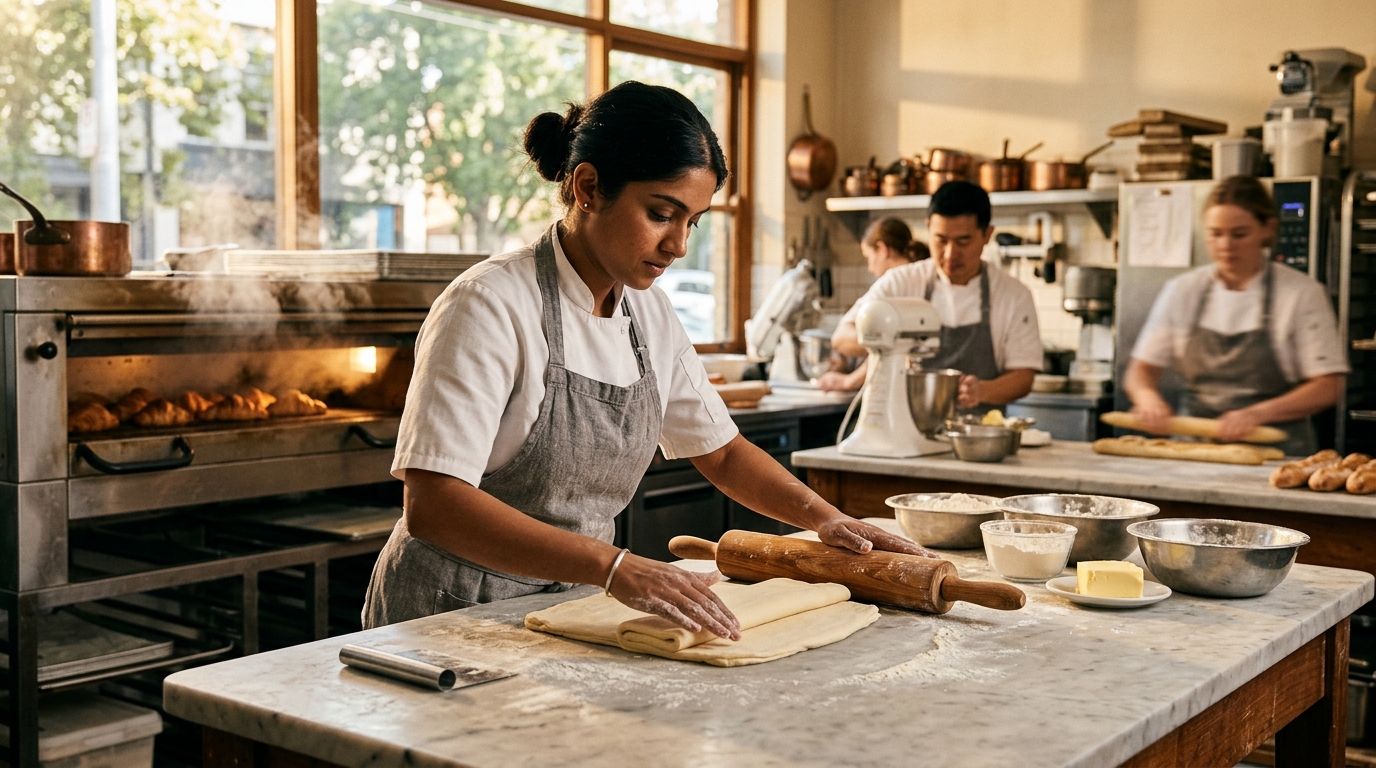
Quick price summary: Croissant in Melbourne (2026)
- Low end: $4.50 – $6.00
- Mid-range: $6.00 – $9.00
- High end / enterprise: $9.00 – $14.00+
Prices in AUD. Last updated 2026.
A croissant in Melbourne can cost anywhere from $4.50 at a supermarket or fast food counter to $14.00 at a dedicated patisserie using imported French butter and laminated dough made over two to three days. That spread reflects something meaningful: not all croissants are made the same way, and the difference in effort, ingredients, and skill between a mass-produced version and a hand-rolled laminated pastry is substantial.
Prices vary across Melbourne’s neighbourhoods, café formats, and production methods. A shopping strip in Brunswick will price differently from a patisserie in the CBD or a specialty grocer in South Yarra. Whether you want a plain butter croissant to eat standing at a counter, or you want to place a bulk order for an office breakfast, knowing the real price range helps you find genuine quality rather than just the cheapest option on the shelf.
What Do Croissant Cost in Melbourne?
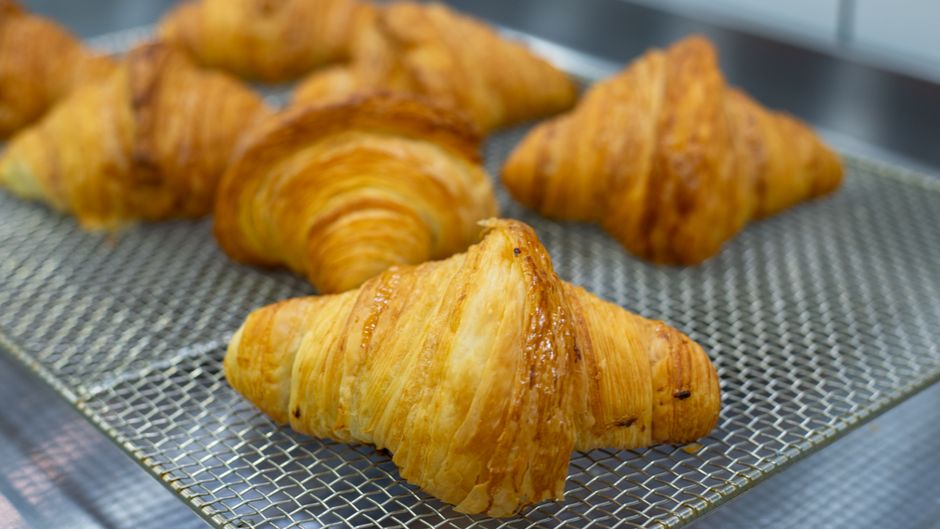
The most common price point for a single plain butter croissant at a Melbourne café or patisserie sits between $6.00 and $8.00 in 2026. At this level you are generally getting a fresh, flaky croissant with visible lamination, a honeyed golden exterior, and a buttery interior that pulls apart in layers. Filled croissants (almond, ham and cheese, chocolate) typically run $7.50 to $10.00 depending on the filling and the venue’s positioning.
At the lower end, supermarket and chain café croissants sit around $4.50 to $6.00. These are usually par-baked or frozen and finished on site, which accounts for the price difference. At the top of the market, specialty patisseries in areas like Carlton, Fitzroy, and Hawthorn charge $9.00 to $14.00 for croissants made with cultured butter, long fermentation schedules, and hand-laminated dough. If you want to place a bulk order for catering or a workplace breakfast spread, most patisseries offer a discount of 10 to 20 per cent on orders of a dozen or more, bringing the per-unit cost down to the $6.00 to $9.00 range even for premium product.
Price Breakdown by Service Level
| Service Level | What You Get | Typical Price Range (AUD) | Best For |
|---|---|---|---|
| Basic | Par-baked or frozen croissant finished in-store, standard margarine or low-grade butter, available at supermarkets and chain cafés | $4.50 – $6.00 | Everyday grab-and-go, budget-conscious buyers, large catering volumes on a tight spend |
| Standard | Fresh-baked daily croissant at a neighbourhood café or bakery, decent lamination, butter-based dough, plain or lightly filled | $6.00 – $8.00 | Daily café visits, office morning teas, anyone wanting reliable quality without patisserie pricing |
| Premium | Hand-laminated croissant from a dedicated patisserie or artisan bakery, cultured or imported butter, long cold fermentation, complex flavour and texture | $8.00 – $11.00 | Weekend treats, gifting, food enthusiasts, venues like patisseries in Brunswick, Carlton, or Fitzroy |
| Specialty / Custom | Filled or flavoured croissants with premium components (truffle, crème pâtissière, seasonal fruit, almond frangipane), or bulk catering orders with custom packaging | $11.00 – $14.00+ | Special occasions, corporate catering, bespoke shopping orders, gift boxes |
What Affects the Cost of Croissant in Melbourne?
Butter quality and origin
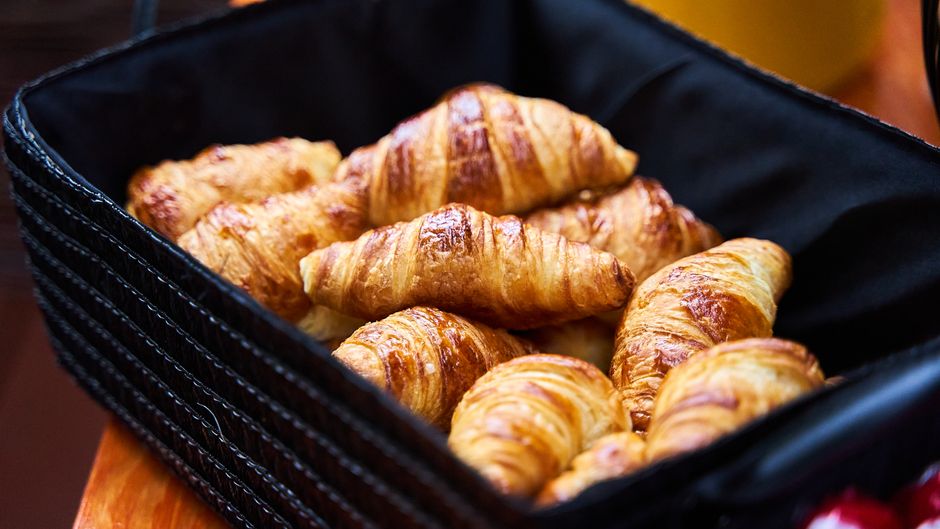
Butter is the defining ingredient in a laminated croissant. Patisseries using French or European cultured butter (such as Échiré or Beurre de Normandie) pay significantly more per kilogram than those using standard Australian butter. That cost flows directly into the retail price. A croissant made with quality butter has a more pronounced flavour, a cleaner finish, and a crisper exterior shell.
Lamination method and production time
Proper lamination involves folding butter into dough repeatedly over one to three days in a temperature-controlled environment. This creates the flaky, layered structure that defines a good croissant. Bakeries that follow this process have higher labour costs and lower throughput than those using pre-laminated frozen dough. The time investment is reflected in the price you pay at the counter.
Location within Melbourne
Rent and overheads vary dramatically across the city. A patisserie in South Yarra or the CBD faces significantly higher costs than a bakery on Sydney Road in Brunswick or in an outer suburb. You will generally find the best value for quality in inner-north and inner-west suburbs, where the café and bakery culture is strong but rents are more manageable than in premium postcodes.
Fillings and added components
A plain butter croissant is the baseline. Almond croissants (soaked in syrup, filled with frangipane, and topped with flaked almonds) require extra preparation time and ingredients, typically adding $1.50 to $3.00 to the price. Ham and cheese, crème-filled, or seasonal flavour croissants sit at a similar premium. When you place an order for filled croissants, factor in this uplift from the start.
Order volume and format
Buying a single croissant to eat in the store is always the most expensive per-unit format. Many Melbourne patisseries and bakeries offer discounts for orders of six, twelve, or more, particularly for catering. If you are shopping for a group or an event, calling ahead and asking about bulk pricing can reduce the per-unit cost by 10 to 20 per cent at most independent venues.
How to Get Accurate Quotes
- Identify what you actually need. A single croissant from a nearby café requires no quote at all. If you are placing a catering order for 20 or more, contact the patisserie or bakery directly, specifying quantity, variety (plain, almond, filled), and the date you need them ready.
- Call or visit in person where possible. Many Melbourne bakeries do not manage complex orders through their website or social media. A direct call in the morning (before 10am when staff are less pressured) gets you clearer pricing and availability.
- Ask about lead time. High-quality croissants require advance preparation. Most patisseries ask for 24 to 48 hours notice for orders above a dozen. Some require up to a week for specialty or custom items.
- Confirm what is included in the price. Ask whether packaging, delivery, or a cooling bag is included. Some venues charge separately for catering trays or branded boxes.
- Compare at least two or three venues in your area before committing to a large order. Prices and quality vary enough across Melbourne that a short search can find meaningfully better value.
Red Flags to Watch Out For
- Croissants displayed unwrapped in a warm cabinet for hours. A good croissant is best within two to four hours of baking. A venue that shows no concern for how long product sits on display is not prioritising freshness.
- No visible lamination or layering when you break the croissant open. A dense, bready interior with no flaky layers is a sign of under-laminated or mass-produced dough, regardless of what the price tag says.
- Unusually low prices with no explanation. A patisserie charging $3.50 for a “butter croissant” is almost certainly using margarine or a low-grade fat blend. This is not necessarily a problem for everyday eating, but it should be labelled honestly.
- Vague answers when you ask about ingredients. A confident, quality baker can tell you what butter they use and roughly how long their dough ferments. Evasion on basic questions about ingredients is a concern.
- Refusal to accommodate advance orders or no system for placing bulk orders. For catering quantities, a venue with no process for managing orders is a reliability risk.
- Croissants that smell of artificial butter flavouring rather than real dairy. This is a clear indicator of low-quality fat or artificial additives being used in place of proper butter.

Frequently Asked Questions
How much do croissant cost in Melbourne on average?
The average price for a single plain butter croissant at a Melbourne café or bakery in 2026 is $6.00 to $8.00. Supermarket and chain options sit lower at $4.50 to $6.00, while dedicated patisseries in areas like Brunswick, Carlton, and Fitzroy charge $8.00 to $11.00 for hand-laminated versions. Filled croissants add roughly $1.50 to $3.00 to the base price.
Why are some croissant prices so much cheaper?
Cheaper croissants are almost always made with par-baked or frozen dough, lower-grade fats, and faster production methods that skip the multi-day lamination process. This produces a product that looks similar on the outside but has a denser texture, less flavour depth, and a shorter window of good eating quality. The ingredient and labour cost savings are real, and they show up in the eating experience.
Is it worth paying more for croissant in Melbourne?
For an everyday grab-and-go breakfast, a $5.50 to $6.00 café croissant is perfectly adequate. If you want to experience what a properly laminated, butter-rich croissant actually tastes like, spending $8.00 to $11.00 at a patisserie that makes their own dough from scratch is worth doing at least occasionally. Melbourne has a strong patisserie and artisan bakery scene, particularly in Brunswick and the inner north, and the difference in quality at that price point is noticeable enough to justify the gap.
Melbourne’s croissant market in 2026 gives buyers a genuine range of options across every price point. Whether you are looking for a reliable daily croissant from a local café, want to find the best flaky, buttery version the city has to offer from a proper patisserie, or need to place a bulk order for a workplace or event, understanding what drives pricing helps you spend wisely. The sweet spot for quality and value sits around the $6.50 to $9.00 mark, where you can find fresh, well-made croissants at independent cafés and bakeries across the city without stepping into premium patisserie territory.
For a curated list of top-rated providers, see our guide: Best Croissant in Melbourne (2026).