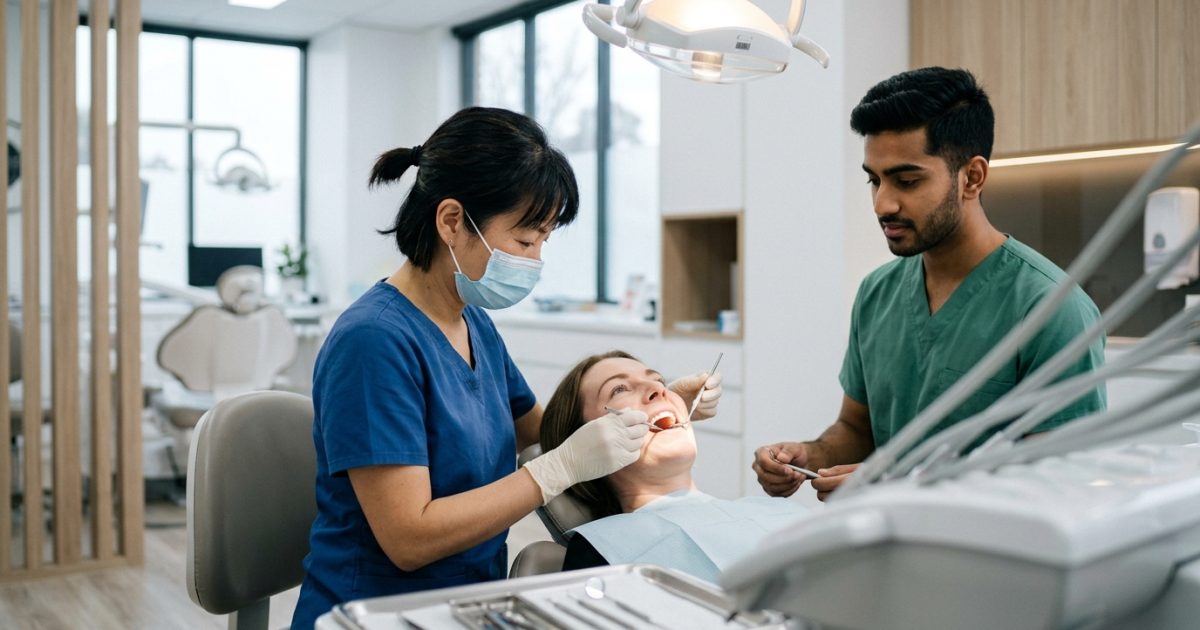
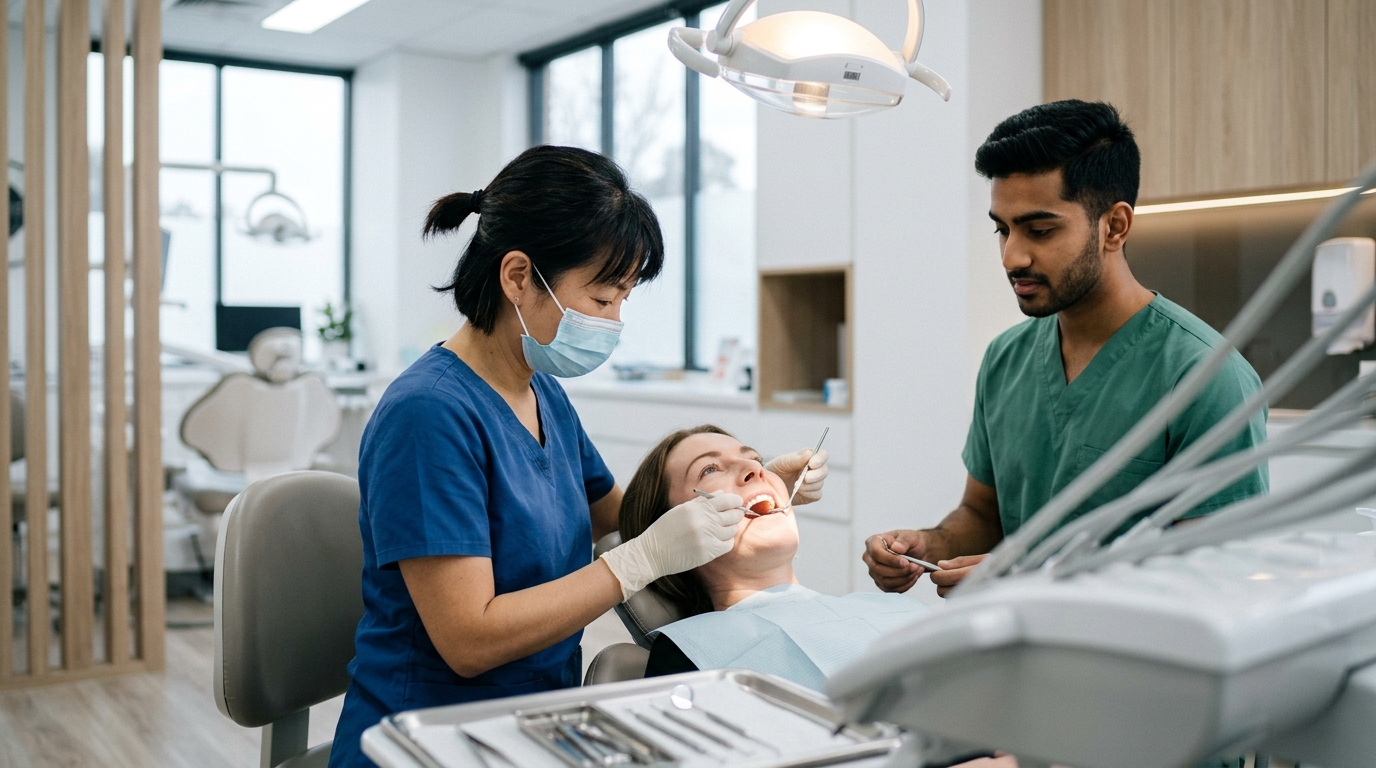
Quick price summary: Dentists in Melbourne (2026)
- Low end: $60 – $180 (basic check-up and clean, public dental, or university clinic)
- Mid-range: $180 – $800 (standard private practice, fillings, extractions, scale and clean)
- High end / enterprise: $800 – $8,000+ (crowns, root canals, orthodontics, full smile makeovers)
Prices in AUD. Last updated 2026.
Dental care in Melbourne covers a wide spectrum of services, from a routine check-up and professional clean through to complex restorative and specialist work such as root canal treatment, dental implants, orthodontic braces, and oral surgery. Each of these sits at a very different price point, and the gap between the cheapest and most expensive provider for the same treatment can be substantial. Understanding what drives that gap is essential before you book an appointment or accept a treatment plan.
Costs vary because dental practices in Melbourne set their own fees. Unlike Medicare, which covers most GP visits, standard dental treatment sits almost entirely outside the public health system for adults. The Australian Dental Association (ADA) publishes an annual fee schedule as a guide, but private dentists are free to charge above, at, or below those figures. Your out-of-pocket cost will depend on the type of treatment, the dentist’s experience and location, whether you hold private health insurance, and whether you qualify for any government-funded dental programme.

What Do Dentists Cost in Melbourne?
A standard dental check-up and scale and clean at a private Melbourne clinic typically costs between $180 and $350 for the combined appointment. A basic examination alone runs $60 to $120, while a professional clean adds another $100 to $180 depending on the amount of build-up and time required. X-rays are usually charged separately, ranging from $32 per single film to $155 or more for a full-mouth series. Fillings start around $150 for a small composite filling and can reach $450 or more for a large multi-surface restoration. A single tooth extraction sits between $150 and $500 at a general practice, while a surgical removal of an impacted wisdom tooth often costs $350 to $700 per tooth. Root canal treatment on a molar typically ranges from $1,200 to $2,000, and a porcelain crown adds another $1,500 to $2,500 on top.
At the lower end of the market, eligible Victorians can access care through the Royal Dental Hospital Melbourne or community dental clinics under the public dental system. Adults assessed as concession card holders may pay a capped co-payment of $39 per visit up to a maximum of $394 per year under the Victorian public dental fee schedule. Children aged up to 17 years old can access free public dental care through the Child Dental Benefits Schedule, which provides up to $1,095 over two consecutive calendar years for basic services. University dental clinics such as those run by the University of Melbourne also offer reduced-rate treatment carried out by supervised students, with check-ups sometimes as low as $60 to $77.
Price Breakdown by Service Level
| Service Level | What You Get | Typical Price Range (AUD) | Best For |
|---|---|---|---|
| Basic / Public | Check-up, scale and clean, basic fillings at public dental clinics or university practices | $0 – $180 (co-payments or reduced fees) | Concession card holders, eligible children, patients on waitlists willing to wait |
| Standard Private | Check-up, X-rays, professional clean, fillings, simple extractions at a general private practice | $180 – $800 per visit or treatment | Adults without complex needs who want prompt appointments and a regular dentist |
| Premium Private | Root canal, crowns, veneers, teeth whitening ($449 typical), dental implants, Invisalign or clear aligners | $800 – $5,000+ per treatment | Patients needing restorative or cosmetic work, or those wanting specialist-level care in a private setting |
| Specialist / Orthodontic | Full orthodontic treatment (braces or clear aligners), oral surgery, periodontal treatment, endodontic specialist care | $3,500 – $10,000+ | Complex cases requiring a registered specialist, second opinions, or multi-year orthodontic treatment |
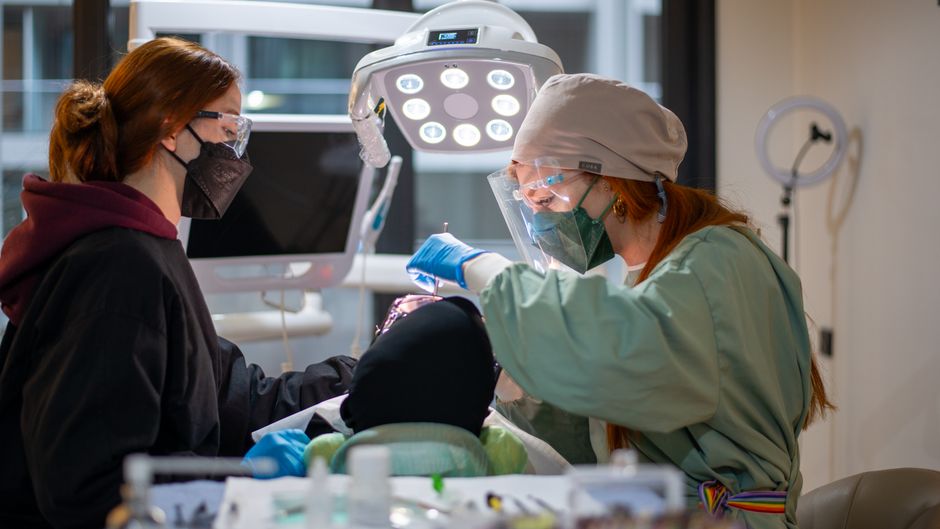
What Affects the Cost of Dentists in Melbourne?
Type of treatment
A scale and clean and a full-arch implant restoration are completely different procedures in terms of time, materials, and clinical skill. Fees scale accordingly. Even within a single category like fillings, the number of tooth surfaces involved, the material used (amalgam versus composite resin), and the tooth’s position all change the final price.
Practice location
Dentists based in Melbourne’s CBD or inner suburbs such as South Yarra, Toorak, and Fitzroy tend to charge more than those in outer suburban areas. Overhead costs including rent and staffing are higher in central locations, and those costs are reflected in consultation fees. The same check-up that costs $250 in the CBD may run $180 in Melbourne’s eastern or northern growth corridors.
Dentist experience and qualifications
A general dentist with 20 years of experience or a dentist holding additional postgraduate qualifications in a specific area will typically charge more per hour of chair time than a recently qualified graduate. Registered dental specialists (orthodontists, periodontists, endodontists, oral surgeons) charge higher fees than general practitioners because specialist training takes an additional three or more years beyond the base dental degree.
Private health insurance and rebates
Extras cover under private health insurance can significantly reduce out-of-pocket costs, particularly for preventive services. Most mid-tier extras policies cover a percentage of check-up, clean, and X-ray costs up to an annual limit. Major dental work such as crowns and orthodontics is covered only under higher-tier policies and is subject to waiting periods, typically 12 months. Patients without extras cover pay the full fee. The Medicare Child Dental Benefits Schedule covers basic services for eligible children aged 0 to 17, reducing or eliminating costs for families who qualify.
ADA fee schedule versus actual clinic rates
The ADA publishes an annual recommended fee schedule as a market reference point. Many Melbourne practices charge at or above ADA rates, and some premium clinics charge considerably above them. A small number of clinics, particularly high-volume practices or those running promotional offers, advertise below-ADA rates. Neither position is automatically better or worse for the patient, though very large discounts on complex work can sometimes indicate a trade-off in materials quality or appointment time.
How to Get Accurate Quotes
- Book an initial consultation and ask the receptionist upfront whether the consultation fee includes X-rays or whether those are charged separately. A standard new-patient check-up should give you a clear written treatment plan with itemised costs before any work begins.
- Ask for the ADA item numbers on your treatment plan. Each dental procedure has a numbered code. You can use these codes to compare quotes between practices, and your health insurer can tell you exactly what rebate you will receive per item number.
- Contact your private health insurer before the appointment and request a rebate estimate for the item numbers on your plan. This takes the guesswork out of your out-of-pocket figure.
- If the treatment plan includes major work costing over $1,000, consider getting one or two comparison quotes from other practices. Bring your itemised plan with item numbers so each dentist is quoting on the same scope of work.
- Check whether you or your children qualify for public dental care through the Royal Dental Hospital Melbourne, community health dental services, or the Child Dental Benefits Schedule. Wait times for public dental care can be long for non-urgent treatment, but the cost savings are significant for eligible patients.
Red Flags to Watch Out For
- A practice that recommends extensive treatment at your first visit without providing a written, itemised plan. Any legitimate treatment plan should list the procedure, the ADA item number, and the cost for each item.
- Unusually low advertised prices with significant additional charges added at checkout. Some clinics advertise $60 check-ups but charge separately for X-rays, photographs, and other diagnostic services that most patients will need.
- Pressure to complete multiple procedures in a single visit without adequate time to consider the plan. You are always entitled to a second opinion, particularly for treatment costing over $500.
- No clear information about the dentist’s qualifications or registration. All dentists practising in Victoria must be registered with the Australian Health Practitioner Regulation Agency (AHPRA). You can verify any dentist’s registration at no cost on the AHPRA website.
- Vague or verbal-only quotes. Reputable practices provide written treatment plans. A dentist who resists putting costs in writing before starting work is a concern.
- Clinics that cannot explain why their fees are significantly below market rate. Deep discounts on crowns, implants, or orthodontic treatment can reflect lower-grade imported materials, rushed appointments, or limited aftercare support.
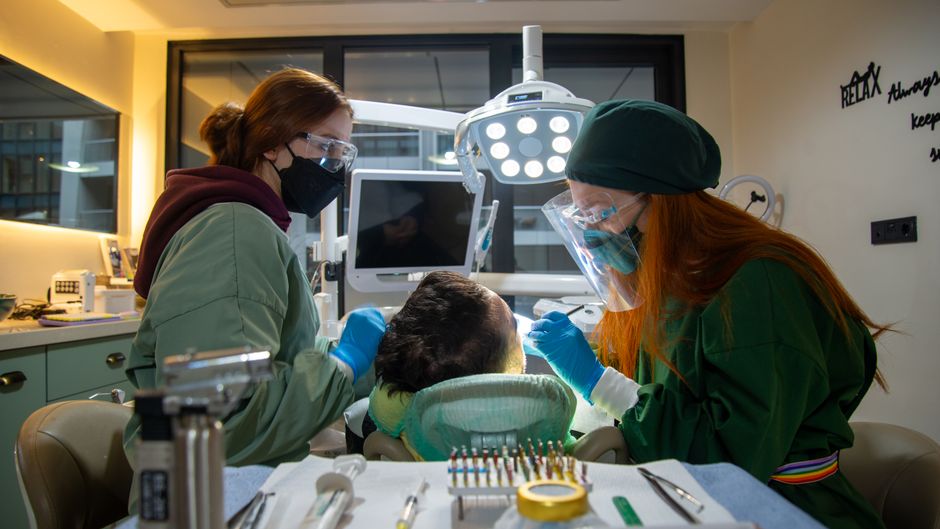
Frequently Asked Questions
How much do dentists cost in Melbourne on average?
For a straightforward check-up, X-rays, and professional clean at a private Melbourne clinic, expect to pay between $250 and $450 in total. A basic filling adds $150 to $300 on top. More complex work varies considerably: root canal treatment on a molar runs $1,200 to $2,000, a porcelain crown costs $1,500 to $2,500, and full orthodontic treatment with braces or clear aligners ranges from $4,999 to $9,500 depending on case complexity and treatment duration.
Why are some dentists prices so much cheaper?
Lower prices reflect several different situations. University dental clinics charge less because treatment is provided by supervised students, which means appointments take longer but the clinical standard is generally sound. Public dental clinics charge reduced co-payments to eligible concession card holders. Some private practices offer loss-leader pricing on check-ups to attract new patients. In a small number of cases, very low prices across all services can reflect reduced appointment times, lower-grade materials, or limited follow-up care. It pays to understand which category a cheap quote falls into before committing.
Is it worth paying more for dentists in Melbourne?
For routine preventive care, a mid-range private practice typically provides good value. For complex restorative work, crowns, implants, or orthodontic treatment, the dentist’s experience and the quality of materials matter more, and paying towards the higher end of the market can reduce the risk of early failure or the need for retreatment. For specialist procedures, seeing a registered dental specialist rather than a general dentist handling the same work is often worth the higher fee due to the additional training and case volume those practitioners bring to difficult treatments.
Dental fees in Melbourne sit across a broad range, and the right choice depends on your clinical needs, your health insurance level, and whether you qualify for public or government-subsidised care. Getting a written, itemised treatment plan and checking your rebate entitlements before work begins are the two steps most likely to prevent a bill that catches you off guard.
For a curated list of top-rated providers, see our guide: Best Dentists in Melbourne (2026).