Quick price summary: Music Schools in Melbourne (2026)
- Low end: $40–$55 per half-hour lesson (community schools, beginner group classes)
- Mid-range: $60–$90 per half-hour, or $100–$140 per hour (private one-on-one tuition)
- High end / enterprise: $120–$160+ per hour (specialist teachers, conservatorium-affiliated schools, advanced performance coaching)
Prices in AUD. Last updated 2026.
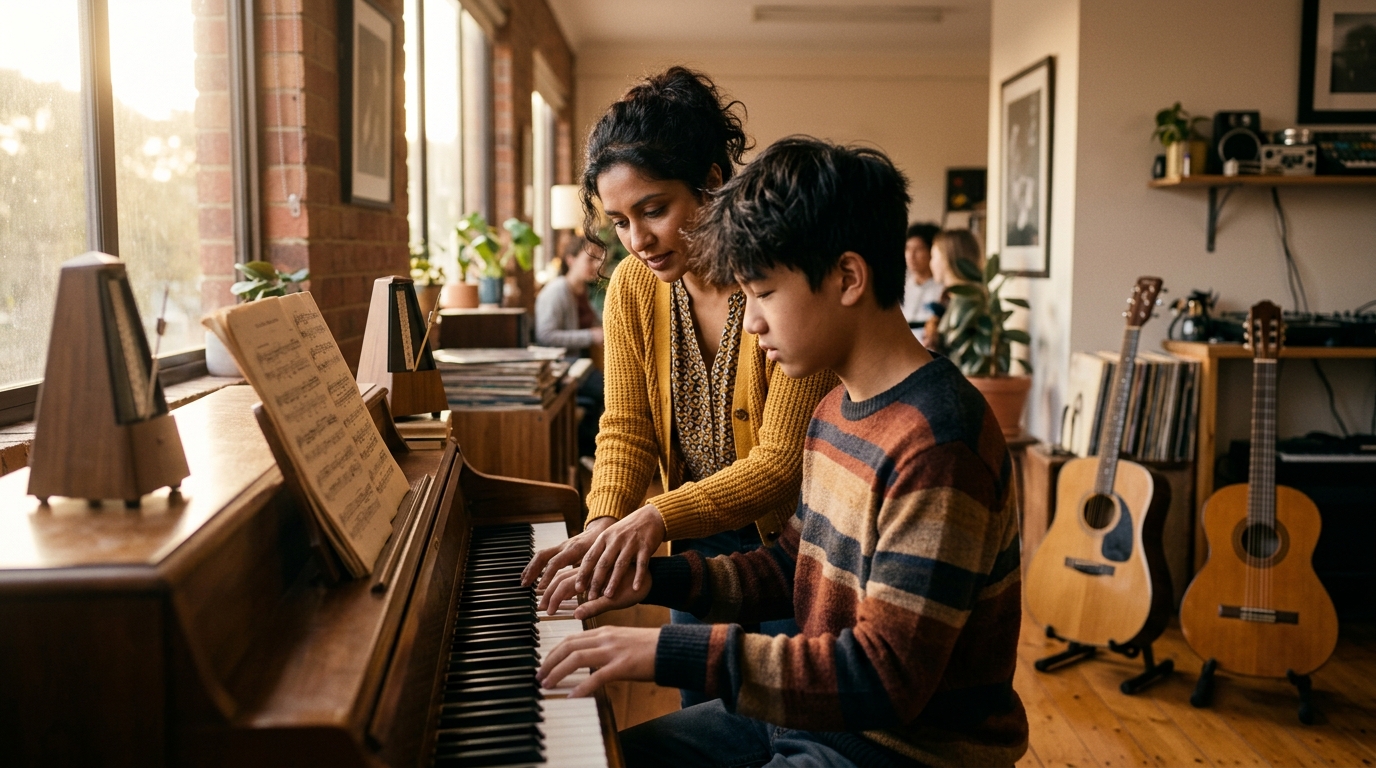
Music tuition in Melbourne covers a wide range of instruments and learning formats, from beginner piano and guitar through to singing, violin, drums, saxophone, cello, flute, ukulele, and music theory. Schools offer individual one-on-one lessons, small group classes, and online sessions, with some academies running programmes for children as young as three and others specialising in adult learners who are picking up an instrument for the first time. Pricing spans everything from community music centres in Melbourne’s outer suburbs to boutique inner-city academies with highly credentialled teaching staff.
Costs vary because music education is not a single product. The instrument, the teacher’s qualifications and experience, the lesson format (private versus group), the session length, the school’s location, and whether enrolment is term-based or casual all push prices in different directions. Families budgeting for a child’s first guitar lesson will face a different cost structure to an adult seeking advanced vocal coaching or a student preparing for AMEB examinations. Understanding those variables upfront saves a lot of confusion when comparing quotes across providers.

What Do Music Schools Cost in Melbourne?
The most common lesson format at Melbourne music schools is the private 30-minute session. In 2026, these typically run between $55 and $85, depending on the school and instrument. A one-hour private lesson with an experienced, qualified teacher generally costs between $100 and $140. Group lessons — usually two to six students sharing a session — sit lower, often between $25 and $45 per student per session, making them a practical starting point for younger children or absolute beginners on a tighter budget.
Term fees are the standard billing structure at most established schools. A standard 10-lesson term for weekly 30-minute private lessons will typically cost between $550 and $850. Schools in Melbourne’s inner suburbs (Richmond, Fitzroy, South Yarra, Carlton) tend to sit at the higher end of that range, reflecting higher operating costs. Outer-suburb and regional fringe schools often price 10 to 15 per cent lower. Online lessons, now a permanent fixture since being normalised post-2020, generally run $5 to $15 cheaper per session than face-to-face equivalents at the same school.
Price Breakdown by Service Level
| Service Level | What You Get | Typical Price Range | Best For |
|---|---|---|---|
| Basic | Group lessons (2–6 students), beginner instruments, less-experienced teachers, community music centres | $25–$45 per session | Young beginners, families on a budget, students testing whether they enjoy an instrument |
| Standard | Private 30-minute one-on-one lessons, qualified teachers, structured term programmes, a range of instruments including piano, guitar, singing, and drums | $55–$85 per 30 min / $100–$120 per hour | Most students, children and adults at beginner to intermediate level |
| Premium | Private 45–60 minute lessons, teachers with university or conservatorium qualifications, AMEB exam preparation, broader instrument range including violin, cello, saxophone, and flute | $110–$140 per hour | Intermediate to advanced students, those pursuing grades or performance goals |
| Specialist / Custom | Performance coaching, master classes, specialist styles (jazz, classical, rock), intensive short courses, conservatorium-affiliated instruction | $140–$160+ per hour | Advanced students, adult returners with specific goals, students preparing for auditions or competitions |
What Affects the Cost of Music Schools in Melbourne?
Teacher qualifications and experience
A teacher with a Bachelor of Music, postgraduate qualifications, or a history of professional performance will charge more than a recent graduate or an enthusiastic self-taught player. This is one of the biggest price drivers across Melbourne schools. Checking whether a school employs teachers with formal tertiary qualifications and a Working With Children Check is worth doing before enrolment, particularly for students working toward AMEB examinations.
Lesson format and duration
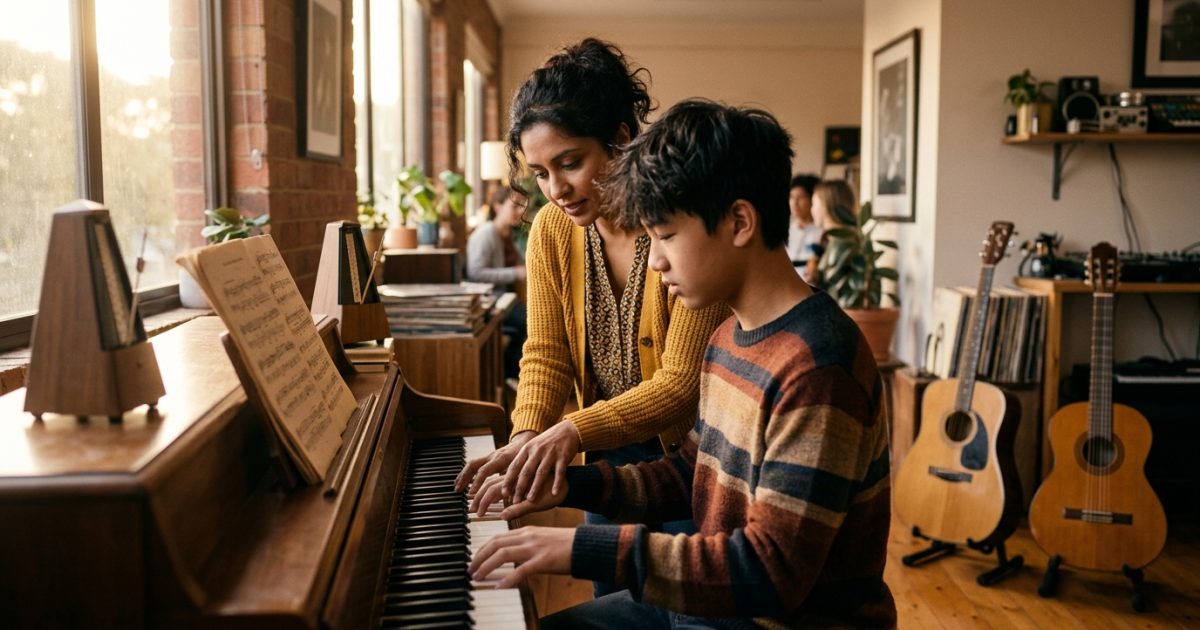
Private one-on-one lessons cost more per session than group classes, but students typically progress faster because the teacher can focus entirely on their individual needs. A 30-minute lesson suits most children and beginners. A 45 or 60-minute session is more appropriate for intermediate and advanced students working on repertoire or technique at a deeper level. Longer sessions carry a higher per-session fee but often represent better value on an hourly rate basis.
Instrument
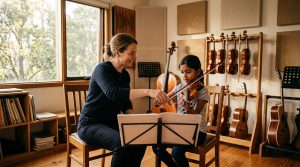
Some instruments attract a small premium due to the specialised knowledge required to teach them well. Violin, cello, double bass, and classical flute lessons often sit slightly higher in price than guitar or beginner keyboard. Singing lessons can also run on the higher end, particularly when the teacher has professional performance experience. Piano and guitar lessons are the most widely available and therefore tend to be the most competitively priced across Melbourne.
Location within Melbourne
Schools in the inner north (Brunswick, Fitzroy, Northcote), inner east (Richmond, Hawthorn), and the CBD fringe carry higher overheads and price accordingly. Schools in the outer east, west, and south-east suburbs, as well as those operating from a teacher’s home studio, generally charge less. A school accessible by public transport or with on-site parking may justify a small premium for families where travel time is a practical constraint.
Enrolment structure and inclusions
Term-based enrolment, where fees are paid at the start of each school term, is standard at most Melbourne music schools. Some schools include music books, printed resources, or access to recital events within the term fee. Others charge for these separately, which can add $20 to $60 per term to the total cost. Casual or drop-in lessons, where available, typically attract a surcharge of $10 to $20 above the standard per-lesson rate.
How to Get Accurate Quotes
- Identify the instrument and lesson format before contacting schools. Know whether you are looking for private or group tuition, the preferred session length, and whether in-person or online lessons suit your schedule. This allows schools to quote accurately rather than giving you a broad price range.
- Ask specifically about term fees rather than per-lesson rates. Most Melbourne music schools price by term, and the total cost can look very different depending on how many lessons are scheduled per term and what is included in the fee.
- Request a trial or introductory lesson. Many schools offer a first lesson at a reduced rate (sometimes half price) so students can assess whether the teacher and environment are the right fit before committing to a full term. Take advantage of this before paying term fees upfront.
- Ask about the cancellation and makeup lesson policy. Some schools require 24 or 48 hours notice for cancellations and will not offer refunds or makeup lessons outside those conditions. Understanding this upfront avoids disputes later, particularly for families with busy or unpredictable schedules.
- Compare at least three schools using the same criteria: instrument, session length, teacher qualifications, and lesson format. Price differences between schools often reflect genuine differences in what is being delivered, so comparing on cost alone without checking those variables can lead to poor decisions.
Red Flags to Watch Out For
- No information about teacher qualifications or credentials on the school’s website. Reputable schools list their teachers’ backgrounds. A school that is vague about who is actually teaching should prompt further questions.
- No written cancellation or refund policy. If a school cannot clearly explain what happens when a lesson is missed due to illness or unavoidable conflict, you risk paying for sessions you never receive.
- Prices significantly below the Melbourne market rate with no clear explanation. A 30-minute private lesson advertised at $25 to $30 may reflect an unqualified teacher, very limited experience, or a school cutting corners on resources.
- Pressure to commit to multiple terms upfront before attending a trial lesson. Established schools are confident enough in their quality to let you try before you commit to a full term, let alone several.
- No flexibility on lesson format or scheduling. Schools that only offer a single time slot or refuse to discuss online alternatives for students who cannot always travel are less likely to accommodate the practical realities of family or work life.
- Unclear instrument requirements at enrolment. A school that does not tell you what instrument you need to have at home before lessons begin, or fails to mention the cost of books, accessories, and materials, is leaving you to discover those additional costs after you have already committed.

Frequently Asked Questions
How much do music schools cost in Melbourne on average?
The average cost of a private 30-minute music lesson at a Melbourne music school in 2026 sits between $60 and $80. A full 10-lesson term of weekly private lessons typically costs between $600 and $800. Group lessons are cheaper, generally $25 to $45 per student per session. Online lessons run slightly below face-to-face rates at most schools. Students in the inner suburbs will tend to pay toward the higher end of these ranges, while those in outer-suburban schools often find prices 10 to 15 per cent lower.
Why are some music schools prices so much cheaper?
Lower prices usually reflect one or more of the following: less experienced or unqualified teachers, group rather than individual lessons, a home studio with lower overheads, a limited range of instruments taught, or a school that does not include exam preparation, recitals, or learning materials in the fee. None of these factors automatically means poor quality, but they are worth understanding before choosing a school purely on price. A beginner child exploring guitar for the first time may do perfectly well with a less expensive option. A student preparing for an AMEB grade examination generally needs a more experienced, qualified teacher.
Is it worth paying more for music schools in Melbourne?
For students with a genuine interest in developing their skills, yes. A qualified, experienced teacher can identify and correct technique problems early, set structured learning goals, and prepare students for grades or performance. Poor technique learned in the first year of lessons can take significantly longer to unlearn than it took to develop. That said, for very young children or adults testing the waters with a new instrument, a mid-range school with solid but not specialist teaching is often the most practical and cost-effective starting point.
Music tuition in Melbourne covers a broad range of price points, instruments, and learning environments. Whether you are enrolling a child in their first piano lesson, returning to guitar as an adult, or preparing a teenager for serious performance study, the right school is one that matches your goals, schedule, and budget with transparent pricing and clearly qualified teachers. Getting a trial lesson before committing to a full term is the single most effective way to avoid paying for a poor fit.