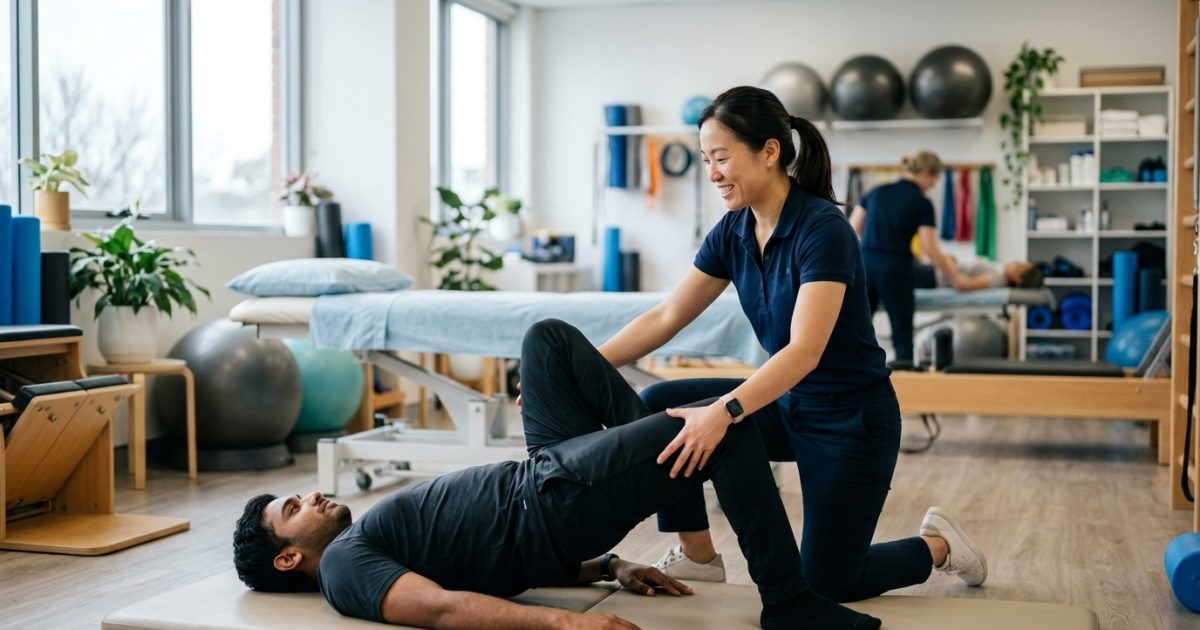

Melbourne has a strong network of sports physiotherapists operating across the CBD, inner suburbs, and outer metropolitan areas, offering treatment for acute injuries, chronic pain, post-surgical rehabilitation, and performance conditioning. Clinics range from standalone practices to multi-disciplinary centres embedded within sporting clubs and medical facilities.
What Sports Physiotherapists in Melbourne Treat
Sports physios in Melbourne manage a broad range of conditions affecting athletes at all levels, from weekend runners to elite competitors. Common presentations include ACL tears, rotator cuff injuries, ankle sprains, stress fractures, hamstring strains, and overuse injuries such as patellofemoral pain and Achilles tendinopathy. Treatment typically combines hands-on therapy (soft tissue work, joint mobilisation, dry needling) with structured exercise rehabilitation programmes. Many practitioners also provide biomechanical assessments and gait analysis, often using video technology to assess running form or technique faults.
Where to Find Sports Physiotherapy Clinics in Melbourne
Several well-regarded clinics are distributed across key areas of Melbourne. Assess Physiotherapy and Back in Motion each operate multiple locations across the city, including the CBD, South Yarra, Richmond, and the eastern suburbs. In Fitzroy and Collingwood, practices such as Integral Performance Physio and Fixed Physiotherapy have built reputations for working with runners and cyclists. Melbourne Sports Medicine Centre in the CBD offers sports physio alongside sports medicine doctors, which suits athletes needing coordinated care. In the south-east, clinics in Caulfield, Glen Waverley, and Dandenong cover a high volume of local sporting clubs. For AFL, cricket, and swimming club connections, some practitioners hold official roles with local associations, which can be worth confirming when booking if sport-specific experience is a priority.
What to Expect at Your First Appointment
An initial sports physiotherapy consultation in Melbourne typically runs between 45 and 60 minutes. The physiotherapist will take a detailed history of the injury, conduct a physical assessment, and discuss a treatment plan with expected timeframes. Many clinics offer telehealth follow-up appointments for ongoing programme management, which is useful for interstate or regional athletes. Session costs generally range from $90 to $160 for an initial consultation, with follow-up appointments between $75 and $120. Private health insurance with extras cover usually applies, and most clinics have HICAPS available for on-the-spot rebates. A referral from a GP is not required to see a sports physio, though it may be needed to access Medicare rebates under a Chronic Disease Management plan.

Frequently Asked Questions
Do I need a referral to see a sports physiotherapist in Melbourne?
No referral is needed to book directly with a sports physiotherapist. You can contact clinics and book an appointment without seeing a GP first. If you have a GP-issued Chronic Disease Management plan or Enhanced Primary Care plan, you may be eligible for Medicare rebates on a set number of sessions per year.
How do I choose between a general physio and a sports physio?
A sports physiotherapist has focused training and clinical experience in sports-related injuries and athletic performance. If your injury relates to sport, physical training, or you have performance goals alongside recovery, a sports physio is the more appropriate choice. For general musculoskeletal complaints unrelated to activity, either can be suitable.
How many sessions will I need?
This depends on the injury. Mild sprains or muscle strains may resolve in three to six sessions over two to four weeks. More complex injuries such as ACL reconstructions or shoulder surgery rehabilitation typically require three to nine months of guided physiotherapy. Your physio will outline a projected timeline at your first appointment.