Quick price summary: Dive Schools in Melbourne (2026)
- Low end: $350 – $570 (introductory/discover scuba sessions and budget open water courses)
- Mid-range: $570 – $950 (full PADI or SSI open water certification courses with gear included)
- High end / enterprise: $950 – $1,900+ (advanced, rescue diver, divemaster, and technical training programs)
Prices in AUD. Last updated 2026.
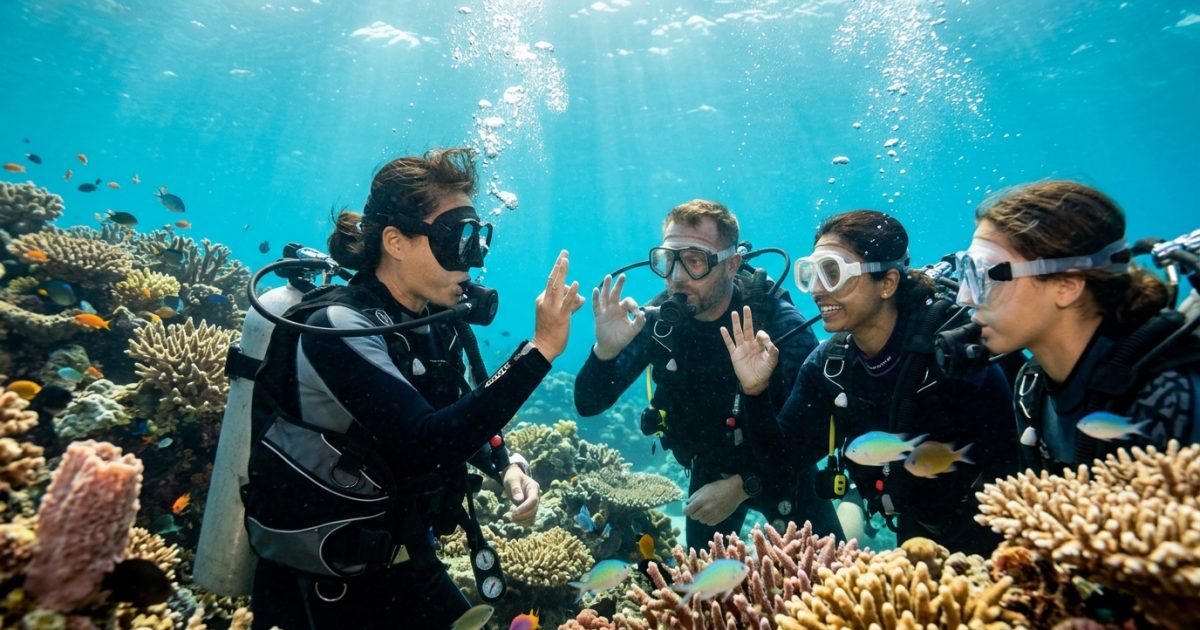
Dive schools in Melbourne offer everything from a single pool session for first-timers through to full professional-level training programs that qualify you to work in the diving industry anywhere in the world. The core product most people are after is the Open Water Diver course, the entry-level certification recognised globally by organisations including PADI and SSI, which qualifies you to dive to 18 metres with a certified buddy. From there, courses extend into Advanced Open Water (40 metre depth limit), Rescue Diver, Divemaster, and technical diving disciplines such as nitrox and rebreather training.
Costs vary considerably because dive training is not a single, standardised product. The price you pay depends on the certification agency, whether gear hire or equipment purchase is included, how many ocean dives are required, whether you do theory online or in a classroom, the size of your training group, and whether you need private tuition to fit around your schedule. Melbourne’s diving conditions, primarily cold-water sites around Port Phillip Bay and the Mornington Peninsula, also mean wetsuits, weights, and lights are non-negotiable pieces of gear that affect overall outlay.

What Do Dive Schools Cost in Melbourne?
A standard PADI or SSI Open Water Diver course in Melbourne typically costs between $569 and $845 in 2026. Most schools quote this as an all-in price covering pool sessions (theory and confined water skills), ocean dives, and certification fees, though you should always confirm what gear is included. Some schools include a full equipment package; others charge separately for wetsuit, weights, BCD, and regulator hire, which can add $50 to $100 per dive day. Introductory “Discover Scuba” sessions, where you are supervised in a pool or shallow ocean site without pursuing certification, generally run from $100 to $250.
At the upper end, technical and professional programs represent the most significant investment. A Divemaster program, the first rung of the professional ladder, typically costs $1,500 to $1,900 in Melbourne, often spread across several months. Technical courses such as nitrox, sidemount, or advanced wreck diving can add $300 to $600 each on top of existing certification costs. Some schools bundle advanced and rescue diver courses into packages priced around $900 to $1,200, which works out cheaper than booking each course separately.
Price Breakdown by Service Level
| Service Level | What You Get | Typical Price Range | Best For |
|---|---|---|---|
| Introductory / Discover Scuba | Single pool or shallow ocean session, no certification, full supervision, gear provided | $100 – $250 | Complete beginners wanting to try scuba before committing to a full course |
| Open Water Diver Course | Online or classroom theory, confined water (pool) skills, 4 ocean dives, certification to 18 metres, gear hire typically included | $569 – $845 | Anyone wanting a globally recognised scuba certification for the first time |
| Advanced Open Water and Rescue Diver | 5 adventure dives to 40 metres, specialty skills (navigation, deep, night), rescue and emergency diver training, may include EFR first aid | $845 – $1,200 | Certified divers looking to expand depth limits, skills, and confidence |
| Divemaster and Technical Programs | Professional-level training, leadership skills, 40+ logged dives required, nitrox or technical specialty options, multi-month programs | $1,200 – $1,900+ | Experienced divers pursuing a career in diving or advanced technical disciplines |

What Affects the Cost of Dive Schools in Melbourne?
Certification Organisation and Standards
PADI is the most widely recognised certification organisation globally, and Melbourne schools that are PADI Dive Centres or Resorts carry higher overhead costs tied to maintaining those standards. SSI and NAUI courses are equally valid for diving anywhere in the world but may be priced slightly differently. The organisation behind your certification affects how your qualification is viewed internationally, so it is worth asking schools which agency they train under and confirming that it is one accepted by dive operators at destinations you plan to visit.
Gear Included Versus Gear Hire
Some open water course prices include a full equipment kit covering wetsuit (a 5mm or 7mm suit is standard for Melbourne’s cool water), BCD, regulator, computer, weights, mask, and fins. Others quote a base price and add $40 to $100 per day for gear hire. If you plan to continue diving after certification, buying your own equipment starts at around $1,200 to $2,000 for a quality entry-level set covering wetsuit, BCD, and regulator. Cameras and lights are additional items not typically included in course fees.
Online Theory Versus Classroom Learning
Most schools now offer online theory (eLearning) as an alternative to in-classroom sessions. Online theory modules generally add $50 to $150 to your course cost, but they let you complete learning at your own pace before attending pool and ocean sessions. This is particularly relevant for people with busy schedules, as it reduces the total number of in-person training days required and gives you more flexibility to fit pool and ocean sessions around your timetable.
Group Size and Private Instruction
Standard open water courses run in groups, typically four to eight students per instructor. Private or semi-private tuition is available at most Melbourne dive schools but costs meaningfully more, usually an additional $150 to $400 on top of the standard course price. Private instruction can be worth the extra outlay if you have specific scheduling constraints, a physical condition that requires closer supervision, or simply prefer a faster learning pace.
Ocean Dive Location and Boat Fees
Melbourne’s ocean training dives take place primarily around Port Phillip Bay and the Mornington Peninsula. Shore dives are cheaper to organise than boat dives, and some schools include both in their standard course. Boat dives improve the training experience and expose you to better diving conditions, but they add logistics costs. If boat dives are not included in your quoted price, expect to pay an additional $50 to $100 per boat trip.
How to Get Accurate Quotes
- Ask for a written, itemised quote that specifies exactly what is included: theory (online or classroom), pool sessions, number of ocean dives, gear hire or provision, certification fees, and any boat costs.
- Confirm which certification organisation the school is affiliated with and verify that your qualification will be accepted at dive sites in any destination you plan to visit.
- Check whether a diving medical assessment is required. Australian standards recommend that new divers complete a medical with a physician experienced in diving medicine before starting a course. Some schools facilitate this; others require you to arrange it independently at a cost of around $80 to $150.
- Ask about scheduling flexibility, particularly whether theory can be completed online, and how far in advance pool and ocean sessions are typically booked. This affects how long it takes from enrolment to certification.
- Compare at least three schools and ask each one whether they offer package pricing if you want to continue from Open Water to Advanced Open Water, as bundled pricing often saves $100 to $200 compared with booking each course separately.
Red Flags to Watch Out For
- Course prices significantly below $400 for a full open water certification. Properly run courses with qualified instructors, gear provision, and certification fees have fixed costs that make very low pricing a warning sign about what is being cut.
- No mention of instructor-to-student ratios. Recognised training standards set maximum ratios for pool and ocean sessions. Schools that are vague about group sizes may be running oversized groups that compromise safety and learning quality.
- Certification through an organisation you have never heard of. Some operators use obscure agencies whose certifications are not accepted by dive operators in Australia, Victoria, or internationally. Stick with PADI, SSI, NAUI, or RAID.
- No medical screening process. Reputable Melbourne dive schools ask students to complete a medical questionnaire and, where indicated, a physician’s diving medical assessment before entering the water. Skipping this step is a genuine safety risk.
- Vague or missing information about ocean dive locations. Legitimate schools can tell you exactly where your ocean training dives will take place, the typical conditions at those sites, and what depth you will reach.
- Pressure to purchase equipment through the school as a condition of enrolment. Good schools will recommend gear and offer it for sale, but your certification should never be conditional on buying from them.

Frequently Asked Questions
How much do dive schools cost in Melbourne on average?
The most common course, the Open Water Diver certification, averages around $700 in Melbourne in 2026, with prices ranging from $569 to $845 depending on the school, inclusions, and scheduling format. Introductory sessions without certification start from $100, and professional-level programs can reach $1,900 or more.
Why are some dive schools prices so much cheaper?
Lower prices usually reflect one or more of these factors: gear hire is excluded from the quoted price, the certification agency is less widely recognised, theory is self-directed with minimal instructor contact, group sizes are larger than recommended, or ocean dives are replaced entirely with pool-based confined water training. Always check what is included before comparing prices across schools.
Is it worth paying more for dive schools in Melbourne?
Paying mid-range to higher prices generally gets you smaller class sizes, more experienced instructors, better-maintained gear, boat dive access rather than shore-only training, and a certification from a globally recognised organisation. For a qualification you will carry for life and rely on underwater, the difference between a $500 course and a $700 to $800 course is often worth it.
Melbourne has a solid range of dive schools operating across the city and the Mornington Peninsula, catering for complete beginners through to experienced divers pursuing professional and technical qualifications. Getting the right course at a fair price comes down to knowing what is included in the quote, confirming the certification organisation’s standing, and checking that the school follows Australian medical and training standards. Use the price ranges in this guide as a baseline, compare itemised quotes from at least three providers, and you will be well-placed to make a confident decision.
For a curated list of top-rated providers, see our guide: Best Dive Schools in Melbourne (2026).