Quick price summary: Tilers in Melbourne (2026)
- Low end: $45–$60 per square metre
- Mid-range: $60–$100 per square metre
- High end / enterprise: $100–$150+ per square metre
Prices in AUD. Last updated 2026.
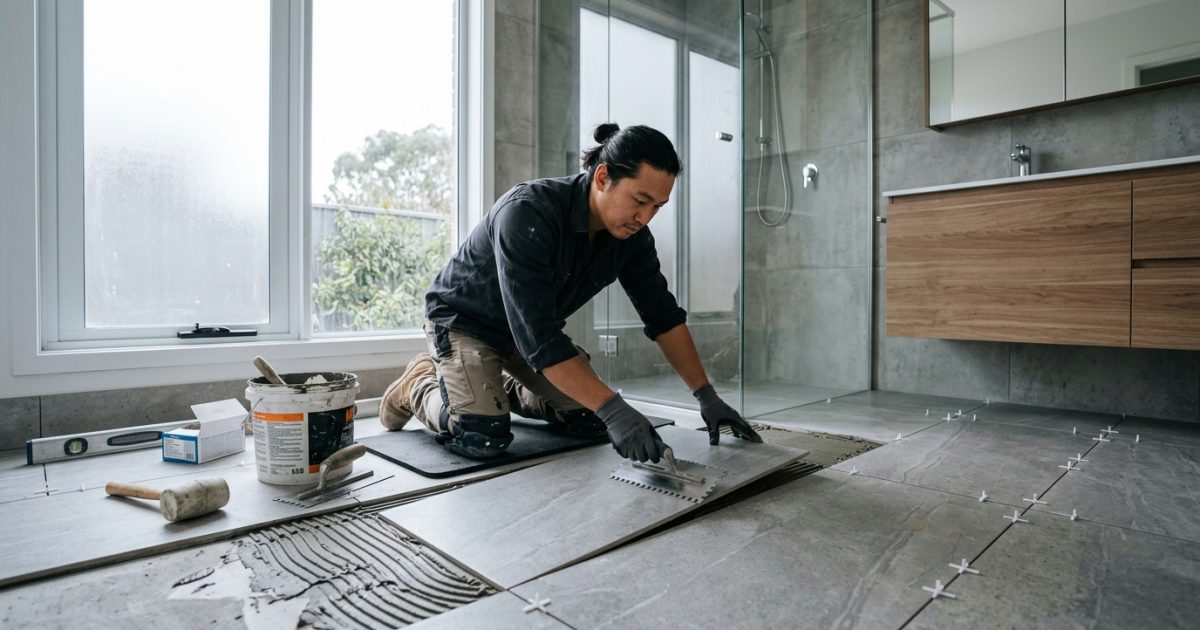
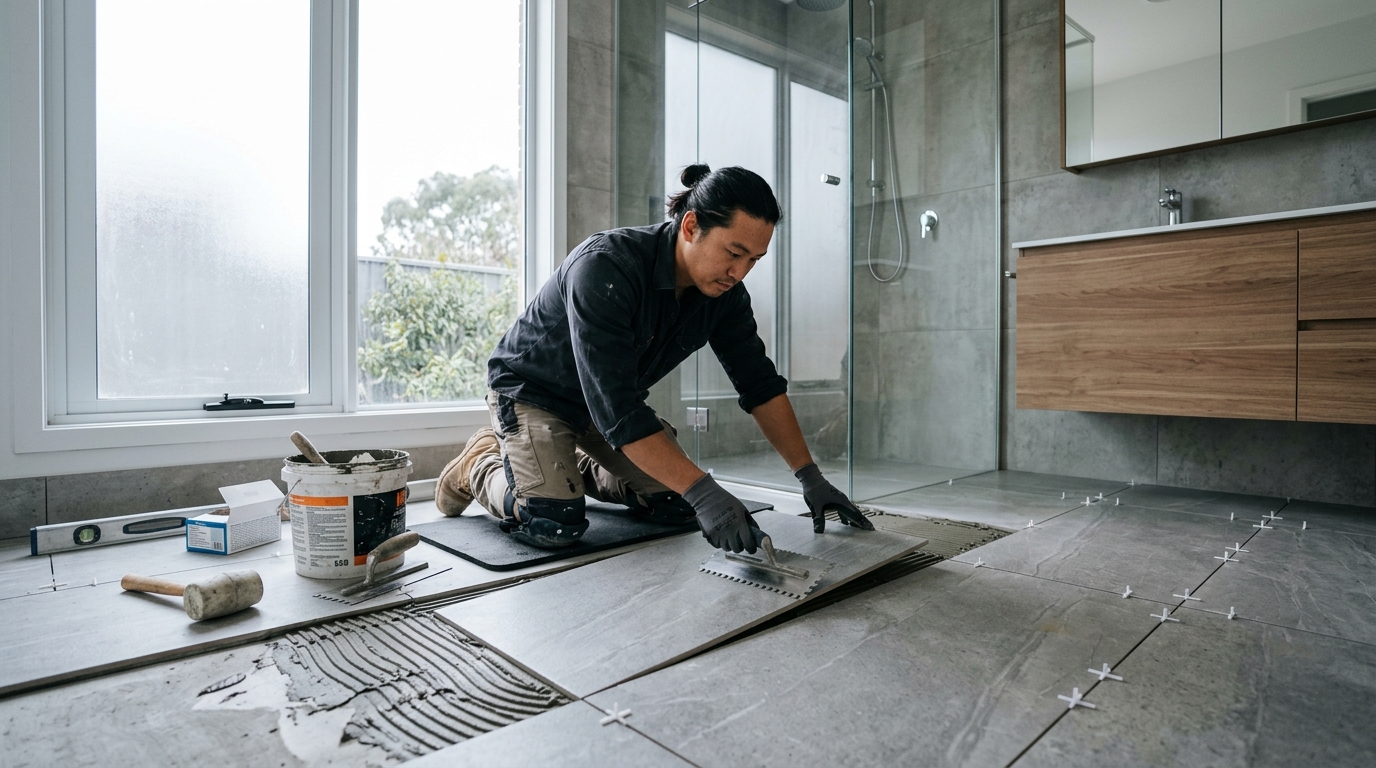
Tiling costs in Melbourne cover a broad range of work: cutting and laying floor tiles, installing wall tiles in bathrooms and kitchens, applying grout, preparing surfaces, waterproofing wet areas, and removing or resurfacing existing tiles. Some jobs also include roof tiling, though that sits at the more specialised end of the trade. Whether you are renovating a bathroom, refreshing a kitchen splashback, or laying floor tiles across a large open-plan space, the scope of work and materials involved will shape what you pay.
Prices vary depending on the size of the area, the complexity of the tile pattern, the type of tiles being installed, and the condition of the surface being tiled. A straightforward floor tile job on a flat, prepared surface is far simpler than working with cementitious tiles on uneven walls or dealing with a wet area that requires waterproofing before any tile goes down. Understanding these variables before you plan your next project will help you get accurate quotes and avoid surprises.

What Do Tilers Cost in Melbourne?
Most professional tilers in Melbourne charge by the square metre, with rates ranging from around $45 per square metre at the lower end to $150 per square metre or more for complex, high-specification work. Hourly rates are also common for smaller jobs or repair work, typically falling between $60 and $120 per hour depending on the tiler’s experience and the nature of the task. For a standard bathroom renovation involving floor tiles and wall tiles, most homeowners in Melbourne should budget between $1,500 and $4,500 for labour alone, with materials on top of that.
Tile cleaning and grout tile cleaning cost an additional $150 to $400 depending on the area size and the condition of existing tiles. Roof tiling cost sits in a different bracket entirely, often starting at $50 per square metre and running well above $120 per square metre for specialised work. If you are planning a medium-difficulty project, such as a tiled bathroom with a feature wall or a tiled kitchen with a diagonal lay pattern, an experienced tiler will typically quote in the $80 to $110 per square metre range for labour.
Price Breakdown by Service Level
| Service Level | What You Get | Typical Price Range | Best For |
|---|---|---|---|
| Basic | Simple floor or wall tile installation on a prepared surface, standard grid pattern, ceramic or porcelain tiles | $45–$60 per sqm | Laundries, straightforward renos, budget-conscious projects |
| Standard | Bathroom or kitchen tiling including surface preparation, waterproofing, grout application, and basic cuts | $60–$100 per sqm | Bathroom and kitchen renovations, medium-difficulty projects |
| Premium | Feature walls, large-format tiles, cementitious tiles, complex patterns (herringbone, diagonal), full wet area waterproofing | $100–$150 per sqm | High-end bathrooms, feature areas, quality renovations |
| Enterprise / Custom | Roof tiling, commercial-scale floor tiling, tile resurfacing across large surfaces, tile removal and full reinstallation | $150+ per sqm | Commercial fit-outs, large residential projects, roof tiling |
What Affects the Cost of Tilers in Melbourne?
Surface preparation and condition
A tiler’s quote begins with the condition of the surface they are working on. If existing tiles need to be removed, or if the substrate is uneven, cracked, or requires levelling before laying tiles, this adds time and cost. Preparing surfaces properly is not optional, it is what determines whether tiles stay in place for decades or start lifting within a few years. Expect to add $15 to $30 per square metre if significant prep work is required.
Tile type and size
Large-format tiles (600x600mm and above) are harder to cut and lay accurately, which increases labour time. Cementitious tiles are a good option for renos with a handcrafted aesthetic, but they require sealing and careful handling, which adds to the overall cost. Standard ceramic or porcelain tiles in a grid pattern are the most cost-efficient to install. The tiles themselves can range from $20 per square metre to well over $200 per square metre depending on the product.
Pattern complexity
A straight grid layout is the fastest and cheapest to install. Diagonal lays, herringbone patterns, and feature designs require more cuts, more waste material, and more time. A complex pattern can add 20 to 40 per cent to labour costs compared with a basic installation on the same area.
Waterproofing requirements
Professional tilers understand the importance of waterproofing in wet areas such as showers, bathrooms, and laundries. In Victoria, waterproofing in wet areas is a mandatory part of the tiling process and must comply with Australian Standard AS 3740. Applying waterproofing membrane adds roughly $20 to $40 per square metre to the job, but skipping it or doing it poorly leads to expensive structural damage down the track.
Access and location within Melbourne
Jobs in Melbourne’s outer suburbs or on upper floors of multi-storey homes can attract a small travel or access surcharge. Tight spaces such as narrow bathrooms or awkward corners also slow the tiling process, which affects the final quote. Most tilers will assess access as part of their site inspection before providing a firm price.
How to Get Accurate Quotes
- Measure your area before contacting tilers. Calculate the total square metres by multiplying length by width for each surface (walls and floors separately). Having accurate measurements allows tilers to give you a meaningful estimate rather than a vague range.
- Be specific about the scope of work. Tell each tiler whether the job includes surface preparation, waterproofing, removal of existing tiles, grout, and tile cleaning. Leaving scope open leads to quotes that are not comparable.
- Confirm whether tiles are supplied by you or the tiler. Many tilers charge labour only and expect you to supply tiles. Others can source and supply tiles at a margin. Clarify this upfront so the quote reflects the full cost.
- Get at least three quotes. Use a trusted directory or referral source to find professional tilers near you. Three quotes give you enough data to identify a reasonable market rate and spot any outliers. When you connect with trusted tilers near you through a reputable directory, you can browse profiles, check reviews, and use an estimate calculator to plan your project with confidence.
- Ask for a written quote that itemises labour, materials, and any additional charges. A verbal price is not a contract. A written quote protects both you and the tiler and makes it easier to compare like-for-like.
Red Flags to Watch Out For
- A quote significantly below $45 per square metre for a standard floor or wall tile job. This usually means corners are being cut on surface preparation, waterproofing, or grout quality, and the result will show it.
- No mention of waterproofing for bathroom or wet area work. Any professional tiler working in these areas in Victoria must apply waterproofing membrane. If they do not raise it, ask directly.
- Pressure to start immediately with no written quote or contract. Legitimate tilers take time to measure, assess the surface, and provide a proper written estimate.
- Requesting full payment upfront before work begins. A deposit of 10 to 30 per cent is standard; full payment before the job starts is not.
- No Victorian Building Authority registration or inability to provide evidence of public liability insurance. Tiling in Victoria that forms part of a domestic building project requires appropriate licensing.
- Quotes that bundle everything into a single lump sum with no line items. Without a breakdown, you cannot tell whether surface preparation, waterproofing, or grout tile cleaning has been included or excluded.

Frequently Asked Questions
How much do tilers cost in Melbourne on average?
The average tiling cost in Melbourne for a standard residential job sits around $75 to $90 per square metre for labour. This covers cutting and laying tiles, applying grout, and basic surface preparation. A typical bathroom renovation of 10 to 15 square metres of tiled surface will cost between $1,500 and $3,500 in labour, with tile cleaning and grout sealing added separately if required. Roof tiling cost and large commercial projects are priced differently and generally quoted on a case-by-case basis.
Why are some tilers prices so much cheaper?
Prices well below market rate usually indicate reduced experience, no registration or insurance, or a plan to cut steps such as waterproofing and surface preparation. Some cheaper operators make tiling unnecessarily time-consuming by underquoting and then requesting variations once work is underway. Others use lower-quality grout or adhesive that saves time in the short term but causes tiles to lift or crack within a few years. The cheapest quote rarely reflects the cheapest outcome over the life of the installation.
Is it worth paying more for tilers in Melbourne?
For bathrooms, kitchens, and any tiled surface that sees regular water exposure, paying for an experienced professional tiler is worth the investment. A properly prepared surface, correctly applied waterproofing, and quality grout work will last 20 years or more without issues. Poor tiling in wet areas, by contrast, can lead to water damage behind walls and under floors that costs far more to fix than the original saving. For straightforward dry-area floor tiles in a laundry or living space, a competent mid-range tiler at $60 to $80 per square metre is a good option for renos where budget is a priority.
Getting tiling right the first time comes down to choosing a licensed professional, understanding what the job genuinely requires, and comparing itemised quotes rather than headline prices. Whether you are installing floor tiles in a new bathroom, tackling a kitchen splashback, or planning a larger renovation project, taking the time to measure accurately, ask the right questions, and verify credentials will give you confidence that the finished result will hold up for years to come.